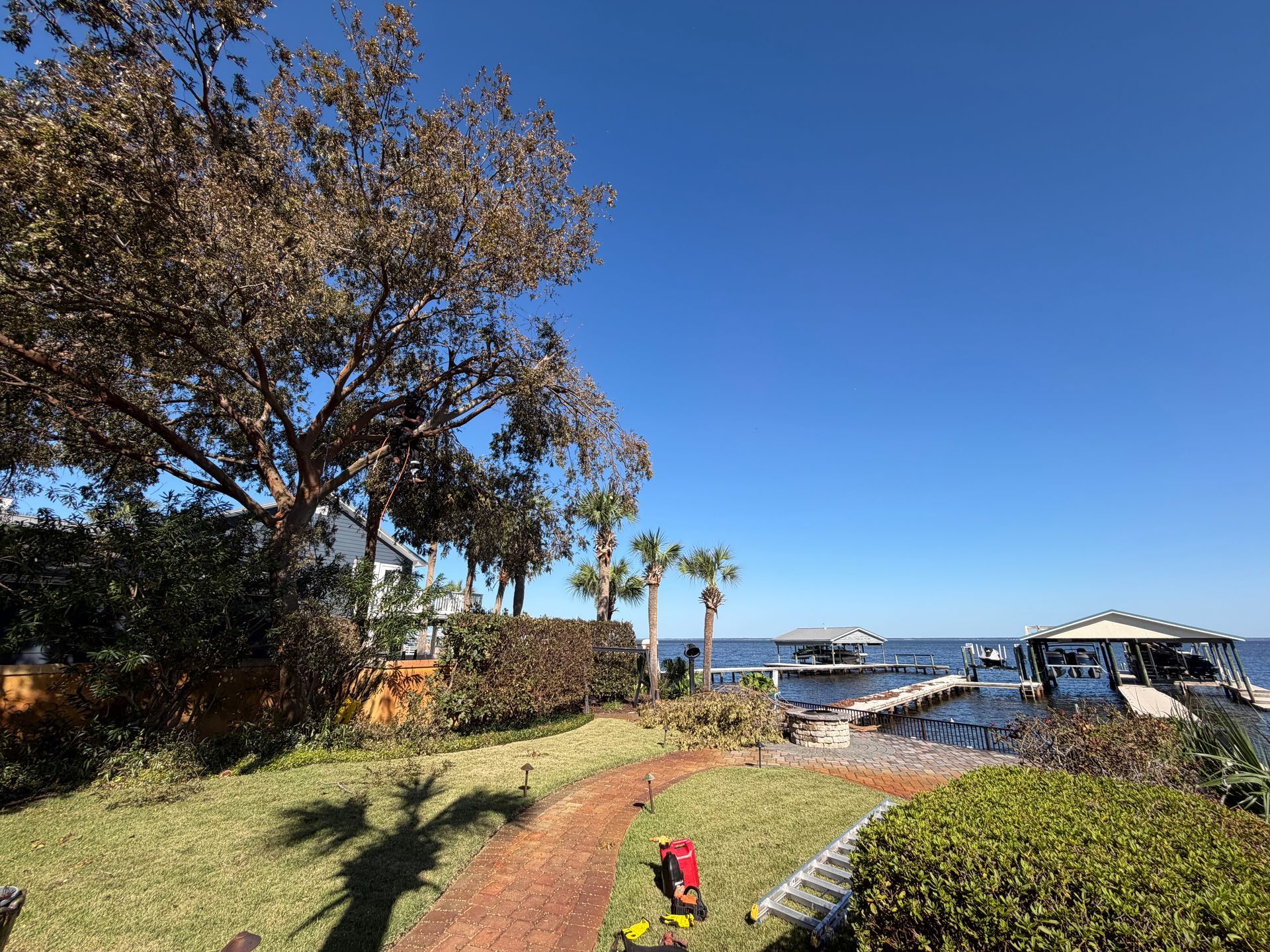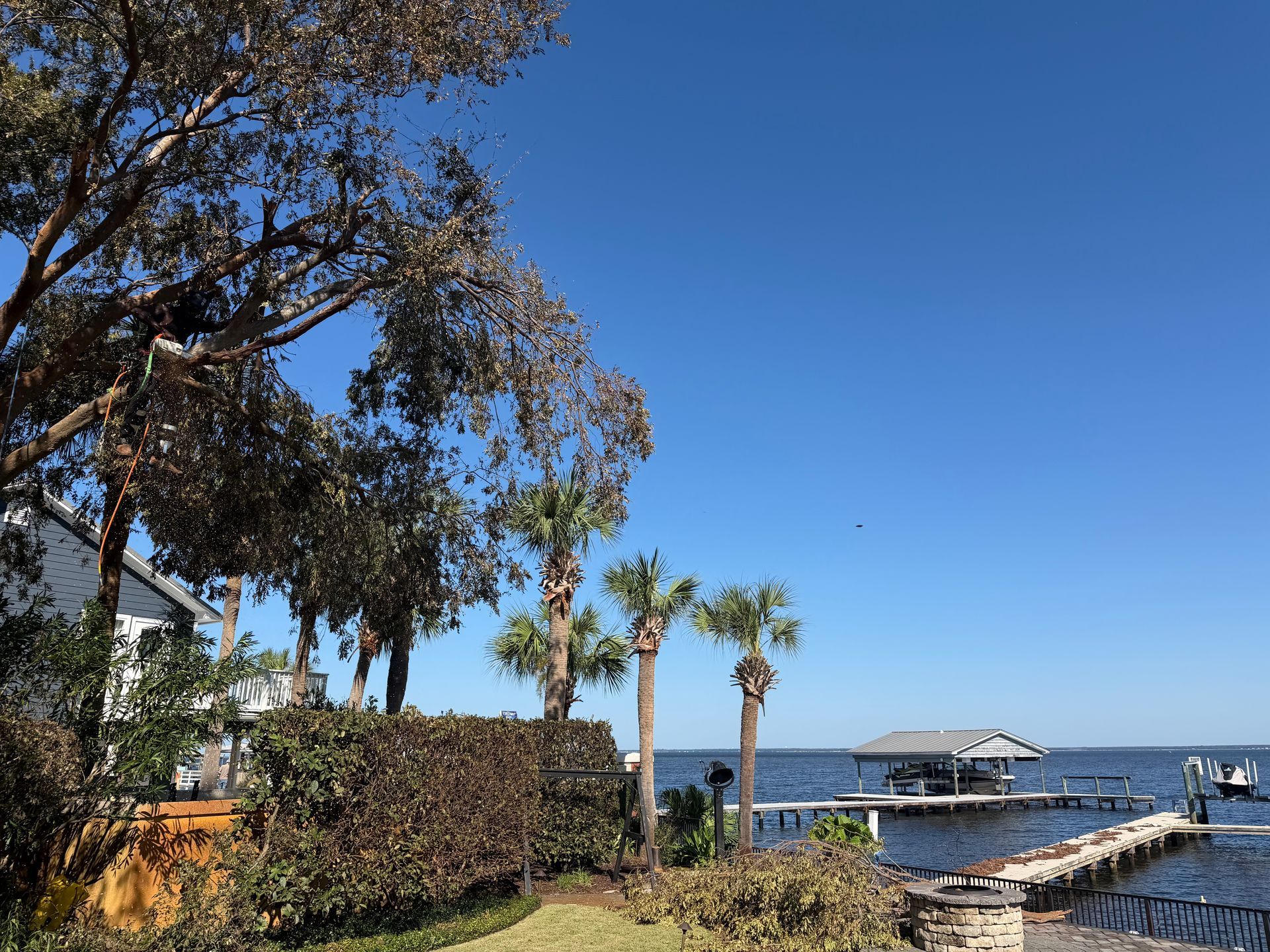
Which Trees Are Most Likely to Fall in a Hurricane in North Port, FL?
Which Trees Are Most Likely to Fall in a Hurricane in North Port, FL?
Hurricane season officially ends November 30, and for many North Port homeowners, the last few seasons left a clear lesson: some trees ride out a storm with little more than a few lost leaves, while others split, snap, or come down entirely.
The difference isn't just luck. Researchers at the University of Florida's Institute of Food and Agricultural Sciences (UF/IFAS) have studied how Florida trees performed after major hurricanes, and certain species consistently hold up better than others.
Here's which trees are most and least likely to survive hurricane winds in Southwest Florida, what else makes a tree likely to fail, and what to do now if a high-risk tree is standing over your home.
Trees With the Lowest Wind Resistance
According to UF/IFAS research on selecting coastal plain species for wind resistance, these trees fall into the lowest wind-resistance group. Several of them are common in North Port and Port Charlotte neighborhoods:
- Laurel oak: One of the most common shade trees in Southwest Florida, and one of the most likely to fail. Laurel oaks often develop decay as they age, which weakens limbs and trunks.
- Water oak: Prone to branch breakage and internal decay, especially in older trees.
- Sand pine: Shallow-rooted and easily uprooted in high winds.
- Southern red cedar: Dense canopies catch a lot of wind.
- Chinese tallow: An invasive species with weak wood.
- Chinese elm: Known for uprooting during storms.
- Carolina laurelcherry, Bradford pear, and pecan: All rated low for wind resistance.
- Washington fan palm: The tall, skinny palm often seen in older neighborhoods is the one palm UF/IFAS lists in the lowest group.
If one of these trees is large and close to your home, pool cage, driveway, or power lines, it deserves a professional evaluation before next hurricane season.
Trees With the Highest Wind Resistance
On the other end of the scale, UF/IFAS rates these trees among the most wind resistant:
- Live oak and sand live oak: Strong, flexible wood and wide, low branching help them hold up in high winds.
- Southern magnolia: A sturdy, long-lived native.
- Crape myrtle: Small and resilient.
- Holly species, including American, dahoon, and yaupon holly
- Bald cypress and pond cypress: Excellent choices for wetter areas.
- Sabal palm: Florida's state tree is noted by UF/IFAS as a strong storm performer.
If you're replanting after removing a high-risk tree, choosing from this list is one of the best ways to reduce storm damage in the future. UF/IFAS also keeps a helpful list of trees that can withstand hurricanes.
It's Not Just the Species
Even a wind-resistant tree can fail if it's in poor condition, and a lower-rated tree in good health may survive a storm. UF/IFAS research points to several factors that affect how trees perform in a hurricane:
- Tree size and age: Larger trees tend to lose more branches and are more likely to be damaged directly by wind.
- Decay and disease: Rot inside the trunk or major limbs can lead to sudden failure.
- Root space: Trees with roots restricted by driveways, sidewalks, foundations, or shallow soil are more likely to uproot.
- Structure: Weak or split branch unions, multiple competing trunks, and long, heavy limbs are common failure points.
- Storm conditions: Wind speed, rainfall, saturated soil, and how quickly a storm moves through all play a role.
Warning Signs a Tree Could Fail in the Next Storm
Walk your property and look for:
- Mushrooms or fungal growth at the base of the trunk or on the roots
- Cavities, soft wood, or hollow areas in the trunk
- Deep cracks or splits in the trunk or where large limbs attach
- A new or increasing lean, especially with soil heaving on one side
- Large dead branches in the canopy
- Damage left over from a previous storm
- Roots that have been cut or damaged by construction
Not sure if a tree is just slowing down for the season or actually in decline? Our guide on how to tell if a tree is dead, dying, or just dormant in Florida can help. For a closer look at the warning signs, read when a tree needs to come down.
Should You Trim or Remove a High-Risk Tree?
Not every at-risk tree needs to come down. In many cases, proper trimming can reduce the risk by removing dead wood, thinning the canopy so wind passes through, and cutting back heavy limbs over the house. Dry season is the best time to do it. Learn why in our post on whether winter is the best time to trim trees in North Port.
Removal may be the safer choice when a tree:
- Has significant decay in the trunk or root zone
- Is leaning toward your home or another structure
- Has major structural defects that trimming can't fix
- Is a low-wind-resistance species that's grown too large for its space
If you do remove a tree, our team can also take care of the stump. See should you remove a stump or leave it? Curious about costs? Read how much tree removal costs in North Port, FL.
Why Now Is the Time to Act
The months right after hurricane season are the best window to deal with risky trees. The weather is drier, ground conditions are firmer, and you won't be competing with emergency storm calls. Taking care of it now means your property is ready long before June 1.
If a storm has already left a tree damaged or hanging, don't wait. TD Trees LLC offers 24/7 storm cleanup and emergency tree service across Sarasota and Charlotte Counties.
Frequently Asked Questions
Which trees are most likely to fall in a hurricane in Florida?
UF/IFAS research rates laurel oak, water oak, sand pine, southern red cedar, Chinese tallow, Chinese elm, Carolina laurelcherry, Bradford pear, pecan, and Washington fan palm among the least wind-resistant trees.
Which trees are most wind resistant in Florida?
Live oak, sand live oak, southern magnolia, crape myrtle, holly species, bald cypress, and pond cypress are among the most wind-resistant trees, according to UF/IFAS. Sabal palms are also strong storm performers.
Are laurel oaks dangerous?
Laurel oaks aren't automatically dangerous, but they have low wind resistance and often develop decay as they age. Large, mature laurel oaks near homes should be inspected regularly.
Should I remove a tree before hurricane season?
Only if it poses a real risk. Many trees can be made safer with proper trimming. A professional evaluation can help you decide whether trimming or removal is the right choice.
When is the best time to remove or trim risky trees?
The dry season, from about November through May, is ideal. Drier ground protects your yard, and scheduling is easier before the next hurricane season.
Do you offer emergency tree removal?
Yes. TD Trees LLC provides 24/7 storm cleanup and emergency tree service throughout Sarasota and Charlotte Counties.
Get Your Trees Storm-Ready Before Next Season
Don't wait for the next named storm to find out which trees on your property can't take the wind. TD Trees LLC is a licensed, insured, family-owned company serving North Port, Port Charlotte, Venice, and all of Sarasota and Charlotte Counties since 2019. We'll take a look at your trees, give you an honest recommendation, and handle everything from professional tree trimming to safe tree removal, with full cleanup and haul-off on every job.
Call (941) 661-6283 or request your free on-site estimate today.