Tree Removal in Port Charlotte, FL: When Does a Tree Need to Come Down?
Tree Removal in Port Charlotte, FL:
When Does a Tree Need to Come Down?
Trees are an important part of a Florida property, providing shade, privacy, and character. But there comes a point when keeping a damaged, declining, or poorly located tree may no longer make sense.
The difficult part is knowing when that point has arrived.
A tree that looks unhealthy doesn't automatically need to be removed. In some situations, professional trimming may be enough to address the problem. In others, significant decline, structural problems, storm damage, or the tree's location may make removal the more practical option.
For property owners looking for tree removal in Port Charlotte, FL, understanding the warning signs can help you decide when it's time to have a tree professionally evaluated.
TD Trees LLC provides tree removal, trimming, stump grinding, land clearing, brush mowing, and other property services throughout North Port, Port Charlotte, and surrounding Sarasota and Charlotte County communities.
1. The Tree Is Dead or Severely Declining
A completely dead tree is one of the clearest situations where removal should be considered.
However, tree decline isn't always immediately obvious.
Warning signs can include:
- Large sections of dead branches
- Significant canopy dieback
- Little or no new growth
- Peeling or deteriorating bark
- Extensive decay
- A tree that no longer produces normal foliage
- Multiple declining sections throughout the canopy
One dead branch doesn't necessarily mean the entire tree is dying.
The overall condition matters.
If you're seeing decline throughout much of the tree, having it evaluated can help determine whether trimming is reasonable or whether removal should be considered.
2. The Tree Has Significant Storm Damage
Port Charlotte and Southwest Florida properties can experience strong winds, thunderstorms, tropical weather, and hurricanes.
Trees often take the brunt of those conditions.
Storm damage can include broken limbs, split trunks, damaged tops, leaning trees, or partially uprooted root systems.
Some trees recover from storm damage with proper pruning and care.
Others sustain structural damage that changes the long-term condition of the tree.
After significant weather, it's worth inspecting larger trees around your home rather than assuming everything is fine because the tree is still standing.
3. The Tree Has Developed a Significant Lean
Not every leaning tree is a problem.
Some trees naturally grow at an angle and remain that way for years.
A new or increasing lean is different.
If a previously upright tree begins leaning after a storm or you notice changes around the base of the tree, it's worth having the situation evaluated.
Look for other changes such as:
- Raised soil around the roots
- Exposed roots
- Cracking soil near the trunk
- Recent movement
- Root damage
- A lean toward a house or other structure
The combination of several warning signs can be more concerning than the lean by itself.
4. The Trunk Has Major Damage or Decay
The trunk provides structural support for the entire tree.
Large cavities, extensive decay, major cracks, or significant damage to the trunk shouldn't be ignored.
Small imperfections are common and don't automatically mean a tree needs removal.
The concern increases when deterioration affects a significant portion of the trunk or appears alongside other signs of decline.
A tree can still have green leaves while experiencing structural problems lower down.
That's why looking only at the canopy doesn't always tell the entire story.
5. Large Branches Are Dying Over Your Property
Sometimes the primary concern isn't the entire tree.
It's what's above your house, driveway, fence, shed, or other frequently used area.
Large dead or damaged limbs may require professional trimming even if the tree itself can remain.
This is where determining the difference between tree trimming and tree removal becomes important.
If the problem is isolated to individual limbs, pruning may address the issue.
If problems are widespread throughout the tree, a larger solution may need to be considered.
6. The Tree Is Too Close to a Structure
A healthy tree isn't necessarily a good tree for every location.
Trees planted too close to homes, garages, fences, driveways, or other structures can become increasingly difficult to manage as they mature.
Branches may continually grow over the roof or interfere with structures.
Roots and the expanding trunk can also create space conflicts depending on the species and location.
Regular pruning can sometimes manage these issues.
In other situations, property owners may eventually decide that removing the tree provides a better long-term solution.
7. The Tree Is Interfering With Your Plans for the Property
Tree removal isn't always prompted by disease or damage.
Sometimes a tree is simply located where a homeowner needs to use the property.
That can happen when preparing for:
- A new home
- A garage or workshop
- A driveway
- A fence
- Landscaping
- Additional usable yard
- Property improvements
- Construction access
For heavily wooded or overgrown properties, individual tree removal may eventually become part of a larger land-clearing project.
TD Trees LLC provides both tree removal and land clearing, allowing the scope of work to be matched to the property owner's goals.
Tree Removal vs. Tree Trimming
One of the most common questions is whether a problem tree actually needs to come down.
The answer depends on what's wrong with it.
Tree trimming may be appropriate when the tree is generally healthy but has:
- Dead branches
- Overgrown limbs
- Excessive growth
- Branches interfering with structures
- Storm-damaged limbs
- Areas that need corrective pruning
Tree removal may be considered when problems affect the entire tree or when its location makes keeping it impractical.
The goal shouldn't automatically be to remove a tree simply because it has a problem.
The goal is to determine what makes sense for that particular tree and property.
What Happens to the Stump After Tree Removal?
Removing the tree doesn't automatically eliminate the stump.
After a tree comes down, homeowners can choose whether they want the remaining stump addressed.
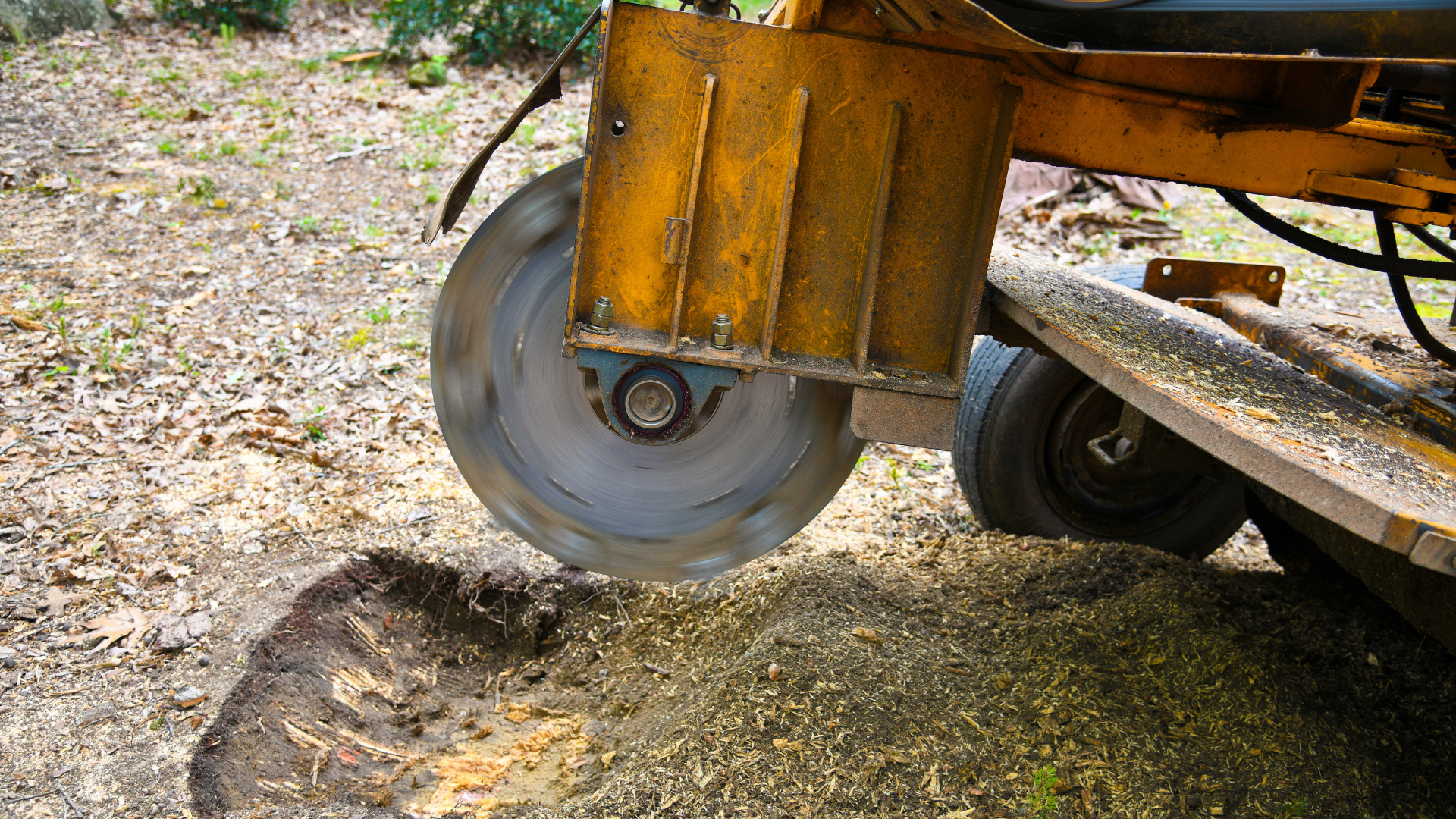
Stump grinding is commonly used to reduce the visible portion of the stump below the surrounding surface.
This can make the area easier to maintain and improve the appearance of the property.
Stump removal or grinding may be especially useful if you're planning to landscape the area, mow over it, or use the space for another purpose.
TD Trees LLC provides stump grinding and stump removal in addition to tree removal.
Can You Remove Several Trees at Once?
Yes.
Some properties need more than one tree removed.
This is common on larger lots, acreage, overgrown properties, and land being prepared for another use.
If you're removing numerous trees along with brush and vegetation, it may make more sense to approach the project as land clearing rather than scheduling individual tree removals.
TD Trees LLC provides land clearing, brush mowing, grade work, dump truck services, and tree removal for larger property projects.
Should You Remove Trees Before a Hurricane?
Removing every tree because hurricane season is approaching isn't necessary.
Instead, property owners can pay attention to trees that already show obvious problems.
Dead branches, damaged limbs, declining trees, structural problems, or previous storm damage may be worth addressing before another major weather event.
Routine tree maintenance can also help identify problems before severe weather arrives.
Florida's storm season is one reason property owners should periodically look at the condition of mature trees rather than waiting until something breaks.
What About Trees on an Overgrown Property?
Overgrown lots can present a different challenge.
You may have a combination of mature trees, small trees, thick brush, vines, vegetation, stumps, and other growth competing for the same space.
In these situations, deciding what stays can be just as important as deciding what gets removed.
Land clearing doesn't necessarily have to mean stripping the property completely.
Depending on your goals, selected trees can potentially remain while unwanted vegetation and other trees are cleared.
Having a clear plan for the property makes it easier to determine the appropriate scope of work.
Frequently Asked Questions About Tree Removal in Port Charlotte
How do I know if a tree needs to be removed?
Significant decline, major trunk damage, structural problems, severe storm damage, root movement, or conflicts with structures can all be reasons to have a tree evaluated for removal.
Does a leaning tree always need to come down?
No. Some healthy trees naturally grow at an angle. A new or increasing lean, especially after a storm or alongside changes around the root system, deserves closer attention.
Can a dead tree be left standing?
Leaving a dead tree in place can create concerns as branches and other parts of the tree deteriorate. Its location and condition should be considered when deciding how quickly it should be addressed.
Is tree trimming better than removing the tree?
If the tree is otherwise healthy and the problem is limited to specific branches or overgrowth, trimming may be appropriate. Removal is generally a larger decision based on the condition and location of the entire tree.
Can you grind the stump after removing a tree?
Yes. TD Trees LLC provides stump grinding and stump removal services that can be coordinated with tree removal.
Does TD Trees provide land clearing in Port Charlotte?
Yes. In addition to tree services, TD Trees LLC provides land clearing and brush mowing for larger or overgrown properties throughout the area.
Does TD Trees serve Port Charlotte, FL?
Yes. TD Trees LLC serves North Port, Port Charlotte, and surrounding Sarasota and Charlotte County communities.
Schedule Tree Removal in Port Charlotte, FL
If you have a dead, damaged, leaning, overgrown, or poorly located tree, the first step is determining what actually needs to be done.
Some trees may simply need professional trimming. Others may be better candidates for complete removal.
TD Trees LLC provides tree removal in Port Charlotte, FL, along with tree trimming, stump grinding and removal, land clearing, brush mowing, grade work, dump truck services, storm cleanup, emergency tree services, and landscaping.
Whether you're dealing with one problem tree or trying to reclaim an overgrown property, TD Trees can help determine the appropriate approach.